
Overthinking workbook guide
An overthinking workbook helps when insight alone has not changed day-to-day rumination, because it turns vague advice into short, repeatable drills. This Trapped Mind guide by Jonathan explains what to look for, how to practice without turning the book into another perfection project, and how Stop the Spiral fits adults who overthink. It is education and self-practice, not therapy.
When does a workbook help with overthinking?
Workbooks are useful when you already know you overthink, yet insight alone has not changed the day-to-day pattern. You need prompts, checklists, and short practices that interrupt loops in real time. A good workbook respects that your attention is limited and that long lectures are hard to use at 11 p.m. when your mind is spinning.
A workbook is also useful when you want privacy and a self-paced format. You can practice at home, on a lunch break, or during a quiet morning. That flexibility matters for people who are not currently in weekly sessions or who want tools between appointments with a licensed clinician.
What should I look for in an overthinking workbook?
- Short exercises: drills you can finish in five to fifteen minutes
- Clear definitions: plain language for rumination, worry, and spirals
- Action exits: every chapter should end in a behavior, not only an insight
- Worry containers: methods like scheduled worry windows
- Relapse-friendly tone: assumes spirals return and teaches re-entry skills
- Honest scope: education and self-practice, without pretending to be therapy
Be cautious with materials that promise permanent elimination of all unwanted thoughts, overnight transformation, or income-related life makeovers. Overthinking skills grow through practice. Marketing that sounds like magic usually is not useful on a Tuesday afternoon when your brain is looping a text message.
How do I use a workbook without overthinking the workbook?
Ironically, people who overthink can turn a workbook into another performance. Avoid that trap with simple rules:
- Pick one chapter or worksheet per sitting.
- Set a timer so the session has an end.
- Messy handwriting counts. Completing beats polishing.
- Apply one idea in the next hour of real life.
- Skip ahead if a page is not relevant today. Linear purity is optional.
Track practice days on a calendar with simple marks. Consistency for two weeks teaches more than one heroic three-hour session followed by abandonment. Free samples of structure live in the spiraling thoughts worksheet and how to stop spiraling sequence.
A sample weekly practice plan
Monday: Identify your top spiral headline and early warning signs.
Tuesday: Practice a five-step interruption sequence once.
Wednesday: Run a fifteen-minute worry window on one parked topic.
Thursday: Do a facts versus forecasts sort on a sticky thought.
Friday: Choose one values-aligned activity and do it while thoughts chatter.
Weekend: Review what shortened spirals and write one adjustment.
Keep the plan light. If you miss a day, resume without a guilt essay. Guilt essays are just rumination wearing a productivity costume. Prompt-style days can use journal prompts for overthinking.
How is Stop the Spiral designed?
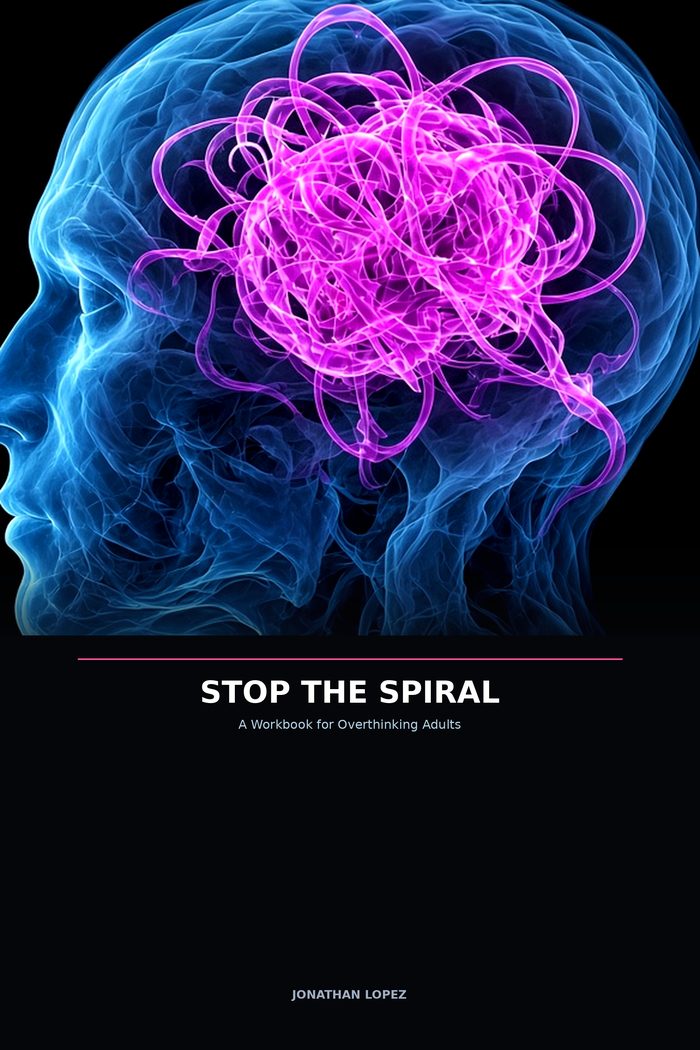
Stop the Spiral: A Workbook for Overthinking Adults focuses on interruption skills, written drills, and practical exits from rumination loops. It is written for adults who are tired of mentally rehearsing conversations and inventing extra endings that never help. The tone aims for clarity and usability rather than clinical jargon.
If your main struggle is sticky intrusive content and the fear that thoughts equal identity, the related workbook Intrusive Thoughts Are Not Facts is a strong companion. Many people deal with both rumination loops and intrusive spikes. Using tools for each pattern can be more effective than forcing one framework onto every mental event. See also intrusive thoughts are not you.
Workbook versus endless journaling
Open-ended journaling can help some people process emotions. For overthinkers, it can also become a transcript of the spiral. Structured worksheets constrain the page: headline, fuels, facts, next step. Constraint is a feature. It reduces the chance that writing becomes another two-hour loop.
If you love journaling, keep it, and add structure on high-spiral days. Use free writing when you feel reflective and spacious. Use worksheets when you feel hooked and urgent.
How do I measure progress without obsession?
Helpful progress markers include:
- Shorter average spiral duration
- Earlier recognition of warning signs
- More successful returns to planned activities
- Less late-night checking or replaying
- Kinder self-talk after a spiral, rather than a second shame spiral
Avoid minute-by-minute scoring that becomes its own monitoring obsession. A weekly glance is enough for most self-practice plans.
Where does professional care fit?
Workbooks can sit beside therapy or stand alone as education tools. They are not diagnosis, treatment, or a replacement for licensed care. If overthinking is tied to panic, depression, trauma history, or compulsive rituals, consider professional support. If you are in crisis, contact local emergency services.
Frequently asked questions
What should I look for in an overthinking workbook?
Short drills, plain language, action exits, worry windows, a relapse-friendly tone, and clear education-only scope. Avoid materials that promise permanent silence of all unwanted thoughts overnight.
How do I use a workbook without overthinking it?
One chapter per sitting, a timer, messy pages allowed, one real-life application, and permission to skip irrelevant pages. Two consistent weeks beat one marathon session.
Is an overthinking workbook the same as therapy?
No. Trapped Mind resources are education and self-practice only. They are not diagnosis or treatment, and they do not replace licensed care.
Start with Stop the Spiral
Stop the Spiral: A Workbook for Overthinking Adults is available on Kindle. If intrusive sticky thoughts are also a major theme for you, Intrusive Thoughts Are Not Facts is a related workbook worth browsing on Amazon.
Disclaimer: Content on Trapped Mind is for education and self-practice only. It is not therapy, diagnosis, treatment, or legal advice. If you need professional support, please consult a licensed clinician. If you are in immediate danger, contact local emergency services.